Member Login

Login
 
Blogs and Articles
Earthquake strike NZ Print
Written by Phoebe Yu   
Saturday, 04 September 2010

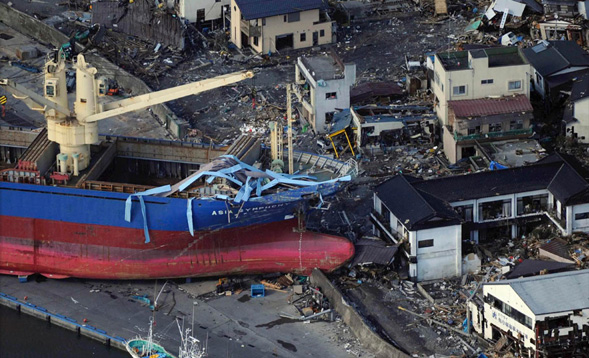
新西蘭7.1級地震

地震在當地清晨四時許發生,據說震動十分強烈, 大約持續五至六分鐘,之後不斷有餘震,市內一 度無水無電,幾個鐘頭後恢復。有經營中餐館的港人移民表示,市內部分建築物受損,主要是舊建築,有路面拱起,水管破裂,令供水不穩定,要儲水準備營業。

基督城國際機場暫時關閉,以檢查跑道及出入境大樓。

Source:
http://hk.news.yahoo.com/article/100904/18/k1it.html


Last Updated ( Monday, 06 September 2010 )
 
Bringing help and hope to Charsadda Print
Written by UM Healthcare   
Tuesday, 17 August 2010

Entry republished with permission by UM Healthcare

Date: 13 Aug 2010
Place: Villages Totakai & Gunbatay,
Tehsil: Tangi
District: Charsadda.
Team: CDRS (paramedical staff) and UM Healthcare Trust (Dr. Qasim and paramedical staff)

Today’s camp was directed at medical and relief activities in Village Totakai which lies in District Charsadda.  Charsadda has been the worst hit district in the recent monsoon floods. According to government sources 60% of the local population has been affected, putting the figure at around 700,000 affectees. Part of the reason for theses staggering numbers is Charsadda’s geography. The district is flanked by three main rivers; Kabul River, Swat River and River Jindi. These rivers then merge south of the district and join the Indus river. Although this makes it one of the best irrigated and most fertile areas in Khyber Pakhtunkhwa province, it also renders the region vulnerable to flood waters. River Jindi particularly, broke its banks and affected a large area around Tangi Tehsil.

There has not been much improvement in the situation yet. People are still awaiting relief even 2 weeks after the floods caused massive devastation to their houses and crops. Although flood waters have receded, it will take a long time to rebuild the area and rehouse the displaced people. Most of the scenic villages along the river banks now lie in ruins.

UM Healthcare and CDRS joined forces to provide relief to yet another village in Charsadda, called Totakai. It lies in Tehsil Tangi, which was particularly hard-hit. Many houses and boundary walls lay in ruins. We had already established our field office at the beautifully designed haveli (mansion) of Dilawar Khan, a landlord of the area, where we had stored supplies of medicines for onward distribution. We left early and had arrived at the camp site by 9 in the morning. The camp was at the place of a local elder, M Zeb Khan. His house is situated in the center of the village Totakai and refugees living with host families were quickly informed of our arrival. By noon we had treated 118 patients, mostly women and children.


Last Updated ( Monday, 23 August 2010 )
 
Drinking water is scarce in our medical camps Print
Written by UM Healthcare   
Monday, 16 August 2010

Entry republished with permission by UM Healthcare

On Saturday, the third day of Ramadan, we held two medical camps: one in mian sahib garhi and another in Gul abad.  A total of 177 patients were seen.

Date: Saturday, 14 August

Village: Mian Sahib Garhi

Tehsil: Tangi

District: Charsadda

Like all of the areas affected by the flood waters, Mian Sahib Garhi has no drinkable water and has not had electricity for the past 14 days.  Our medical teams saw a total of 101 patients, primarily with respiratory tract infections, gastroentritis and skin diseases.  There were also cases of malaria and typhoid seen.  We vaccinated children and adults against  cholera, typhoid and teatnus and packed up the camp at noon.

Village: Gul Abad

Tehsil: Tangi, Charsadda

Our team treated 76 patients among the displaced people staying at the government primary school for girls in Gul Abad.  Again, the primary issues here were skin diseases and dehydration, followed by gastroenteritis and respiratory tract infections.

Report prepared by Dr. Amna Haleema, Medical Officer, UM Healthcare Trust


Medical Camp in Gul Abad village, District Charsadda Date: 05 Aug 2010 Print
Written by UM Healthcare   
Sunday, 15 August 2010

Entry republished with permission by UM Healthcare

Date: 05 Aug 2010
Location:  Village Gul Abad, Tehsil Tangi, District Charsadda.
Team: CDRS (paramedical staff) and UM Healthcare Trust (Dr. Naveed – Team Leader)

UM Healthcare and CDRS have been one of the first teams to start working in the region of Charsadda. The davastation in Charsaada had been massive, however the pace of relief work is slow.

On Thursday, the team went to Gul Abad village in Tangi Tehsil. This is one of the villages that has been ravaged by the flood waters, leaving many homeless who are now staying with their relatives or in neighboring houses that are still standing. Some who have no place to go have turned to government provided camps in schools.

Our visit was coordinated by UM Hospital’s administrator Mr. Haji Sher Akbar through Mr. Nisar (Ex-Nazim of Mandani), who arranged our stay. Even as we were travelling towards the camp site, there was heavy rainfall along the way which continued during our medical camp. Though this made it a bit diffcult for the families to reach us, most of them made it to our site.


Two more Medical Camps in Charsadda Print
Written by UM Healthcare   
Saturday, 14 August 2010

Entry republished with permission by UM Healthcare

Date: Wednesday, August 11, 2010

Village:   DAANG KALAY
TEHSIL  :   Tangi
District    :   Charsadda

On Wednesday, our team went to the Daang kalay village. Our team comprises two doctors (Dr. Haidar Ali & Dr. Naveed) and two paramedics from CDRS.  We saw a total number of 160 patients there, which were mostly males, and mainly skin diseases, respiratory infections, and gastroenteritis all caused by dirty stagnant flood water. The majority of people in the area also suffer from dehydration due to the hot weather and lack of clean water supplies.

In one case, a young female presented to Dr. Naveed with fungal dermatis which was worsened due to the constant water.  She was advised of preventive measures and given anti-fungal oral and topical treatments.  Similarly, a young man presented to me complaining of dizziness, vertigo and diarrhea. We found his blood pressure to be very low and treated him with medicines and fluida via i/v.

 Additionally, we delivered water purification tablets to the people and also vaccinated people against typhoid, cholera, and influenza.

Date: Thursday, August 12, 2010

VILLAGE: BEYAR GARHI
TEHSIL  :   Tangi
DISTT    :   Charsadda

Thursday was the 1st day of Ramadan, and our team went to the village of Beyar Ggarhi which was affected by flood waters on the 1st of  August.   After 13 days we were the first medical team to have reached there.  The whole of the village was damaged by the flood except, luckily, the mosque.  We found that all of their water wells were full of mud, streets were full of bricks and debris of damaged walls.


Last Updated ( Monday, 16 August 2010 )
 
<< Start < Prev 1 2 3 4 5 6 7 8 9 10 Next > End >>

Results 1 - 9 of 155

What is DUMBO

Project DUMBO deploys mobile wireless network on an ad hoc basis for emergency conditions, such as after a natural disaster when a fixed network infrastructure is not available or had been destroyed.

Read More..

What is SAHANA

Sahana is an integrated set of pluggable, web based disaster management applications that provide solutions to large-scale humanitarian problems in the aftermath of a disaster.

Syndicate

Creative Commons License